

How Enkishui Safari Camp Protects the Mara and Its Communities
March 13, 2026
Safari Packing List: What to bring on your Masai Mara Safari
March 19, 2026How Enkishui Safari Camp Protects the Mara and Its Communities
March 13, 2026Safari Packing List: What to bring on your Masai Mara Safari
March 19, 202610 Must See Animals while on Safari at Enkishui Safari Camp
Most of us grew up watching the Lion King and this would probably the first "encounter" you would have had with African wildlife. The Masai Mara will always remind me of the Lion King. Animals in abundance in acres of space. But what animals could you actually come across while visiting the Mara? Here are 10 must see animals while on safari at Enkishui Safari Camp!

1. Lions- The Kings of the Savanna
No Safari is complete without spotting lions, this is especially true for the Masai Mara. Lions thrive in open savanna landscapes like those found in the Mara.
Lions live in social groups called prides, which usually consist of related females, cubs and a small number of adults males, although the males aren't always with the pride as they go on territorial patrols. Females are excellent hunters and work together as a team to ambush prey like zebra, wildebeest and numerous antelope species.
Early mornings and late afternoons are usually the best times of day to see them as this is when they are most active. During the heat of the day they will find some shade and rest.
The Masai Mara is famous for its large prides making this one of the best places in the world to observe natural lion behaviour such as cubs play fighting, males on patrol or lionesses coordinating a hunt.
Where to spot them: Open grasslands, near prey herds and usually not too far from water sources such as the Mara river.
"The Masai Mara is famous for its large prides making this one of the best places in the world to observe natural lion behaviour.. "

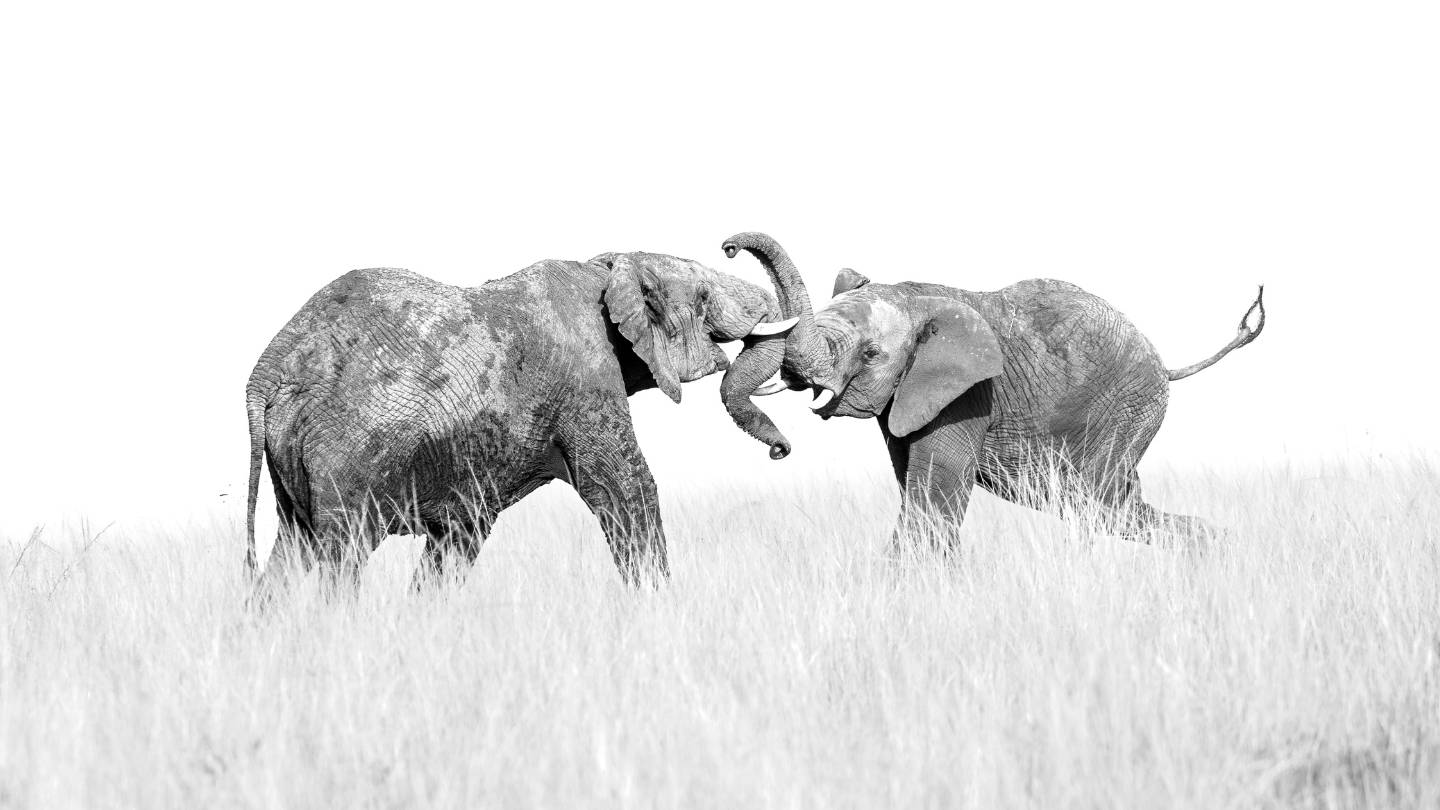
2. Elephants- Gentle Giants of the Plains
The African elephant is the largest land mammal on earth and seeing one up close and in the wild is an awe inspiring experience. Adults males can weigh over 6000kg, which is more than double the weight of the safari vehicle you are viewing these elephants from. Their impressive tusks are used for digging, feeding and defence.
Elephants in the Masai Mara typically travel in family herds led by an experienced matriarch. These groups often include mothers, daughters and calves. Watching elephants interact can be deeply touching, watching calves play underneath their mothers, adults communicating through rumbling calls and trunk touches and just observing them walking through the open plains.
They are also some of the most intelligent animals out there and have incredible memories. They can recognise migratory routes, water sources and even individuals after many years.
Where to Spot them: Near woodlands, riverine forests and water sources like the Mara river.
3. Hippos- River Giants
The massive Hippopotamus spends most of its life in water, emerging mainly at night to graze on grass on the riverbanks. Hippos can weigh up to 3000kg's and often gather in large groups called pods.
During the day they remain submerged in rivers and pools to keep cool under the African sun. From a distance you may only see their eyes, ears and nostrils poking above the water' surface. Interestingly hippos can't swim or float. When wanting to get to a different spot in the water they will sink down to the bottom, walk under water to the new spot where it is shallow and they can stand.
Despite their size, hippos are surprisingly fast and territorial.
Where to spot them: Large rivers and permanent water bodies, like the Mara river.

"Interestingly hippos can't swim or float.."
4. Masai Giraffe- The Tallest Animals on Earth
The Giraffe is the tallest animal on earth, with adults reaching heights of 5,5 metres (18 feet). Their distinctive irregular coat patterns help them blend into the savanna landscape.
Giraffes are browsers rather than grazers, meaning they feed primarily on leaves from tall trees. Their long tongues, which can reach about 45cm (18 inches), allow them to strip leaves from thorny branches with ease.
Despite their calm appearance, giraffes are extremely powerful. A single kick can be strong enough to fend off predators like lions, sometimes even killing a lion. Males often get involved in behaviour called necking, where they swing their necks and heads, hitting each other with force, to establish dominance.
Where to spot them: Areas with scattered acacia trees and open woodland across the reserve.
"A single kick can be strong enough to fend off predators like lions, sometimes even killing a lion..."

5. Leopards- The Elusive Predator
The Beautiful and elusive African leopard is one of, if not the, most exciting animals to spot while on safari. Unlike lions, leopards are solitary and extremely secretive- this makes sighting even more special.
Leopards are masters of stealth and strength. They often hunt at night or in low light, targeting animals such as gazelles, young antelope or even monkeys. After a successful hunt they will often drag their prey into trees to protect it from scavengers such as hyenas.
Their spotted coats offer incredible camouflage among leaves and shadows making them difficult to detect even when they are nearby.
Where to spot them: Tree-lined riverbanks, dense bush areas, and riverine forests along the Mara River.

6. Hyenas- Clever and Social Hunters
The Spotted Hyena is one of Africa's most misunderstood animals. While often portrayed as scavengers, hyenas are actually some of the most successful and skilled hunters.
They live in large groups called clans, which can include up to 80 individuals. Interestingly hyena societies are matriarchal- females are larger, stronger and dominate the hierarchy.
Hyenas are known for their powerful jaws, capable of crushing bones that other predators leave behind. They communicate with a variety of different noises than can sometimes sound a bit "eerie" for lack of a better term.
Where to spot them: Throughout the open plains and grasslands of the Masai Mara, often near predator activity or carcasses.

"The Spotted Hyena is one of Africa's most misunderstood animals..."
7. Zebra- Striped Icons of the Savanna
The striking Plains Zebra is one of the most recognisable animals in Africa thanks to its bold black and white stripes. Each zebra has an unique stripe pattern, much like a human fingerprint.
Zebras are highly sociable animals and usually live in small family groups led by a dominant stallion. They often graze alongside wildebeest and gazelle, forming mixed herds that provides better protection against predators.
During the Great Migration, zebras play and important role because they graze on tougher grasses first, making it easier for the wildebeest to feed on the fresher shoots underneath.
Where to spot them: Open plains and grazing areas, especially near large wildebeest herds.

8. Topi- The Fast Antelope of the Plains
The sleek Topi is one of the fastest antelopes on the planet and a common sight on the plains of the Masai Mara. They have a distinctive reddish-brown coat with darker patches on the upper legs and face.
Topi's are knows for the strange behaviour of standing on top of termite mounds or other elevated spots. From these lookout points they scan the surrounding areas for any signs of predators.
They are also extremely territorial, particularly during the breeding season when males defend small areas and compete for access to the females.
Where to spot them: Short grass plains and open savannah areas where termite mounds are common.

"The sleek Topi is one of the fastest antelopes on the planet..."
9. Thompson's Gazelle- Small but Swift
The delicate Thompson's Gazelle is one of the most abundant herbivores in the Masai Mara ecosystem. Though relatively small, these gazelles are incredibly agile and can reach unbelievable speeds in the escape of predators.
They are easily recognised by the bold black strip running along their sides and their graceful, slender bodies.
When threatened, Thompson's Gazelles often perform a behaviour called pronking, where they leap high into the air with stiff legs. This dramatic jump signals strength and alertness to predators making them less appealing targets.
Where to spot them: Open grasslands across the Masai Mara, often grazing in large groups.

10. Crocodiles- Ancient River Predators
The formidable Nile Crocodile is one of Africa's most ancient and powerful predators. Some individuals in the Mara river can grow longer than 5 metres and weigh over 700kg's.
Crocodiles spend long hours basking in the sun on riverbanks or floating motionless in the water, waiting patiently for prey to approach the water. Their ambush hunting style relies on explosive speed and powerful jaws.
They become especially dramatic during the Great Migration, when thousands of wildebeest and zebra attempt to cross the Mara river. Crocodiles take advantage of the chaos, making these crossings one of the most intense wildlife spectacles in the world.
Where to spot them: Along riverbanks and deep pools of the Mara River, especially at popular migration crossing points.

"Crocodiles take advantage of the chaos, making these crossings one of the most intense wildlife spectacles in the world..."

A safari in the Maasai Mara offers one of the most thrilling wildlife experiences on Earth. From powerful predators like lions and leopards to graceful herbivores like giraffes and gazelles, the diversity of wildlife ensures that every game drive feels like a new adventure.
Whether you're witnessing a pride of lions at sunrise or a dramatic river crossing during the Great Migration, the Masai Mara delivers unforgettable moments that stay with travelers long after the safari ends.
Don't forget your check to ensure you dont miss the 10 Must See Animals while on Safari at Enkishui Safari Camp!